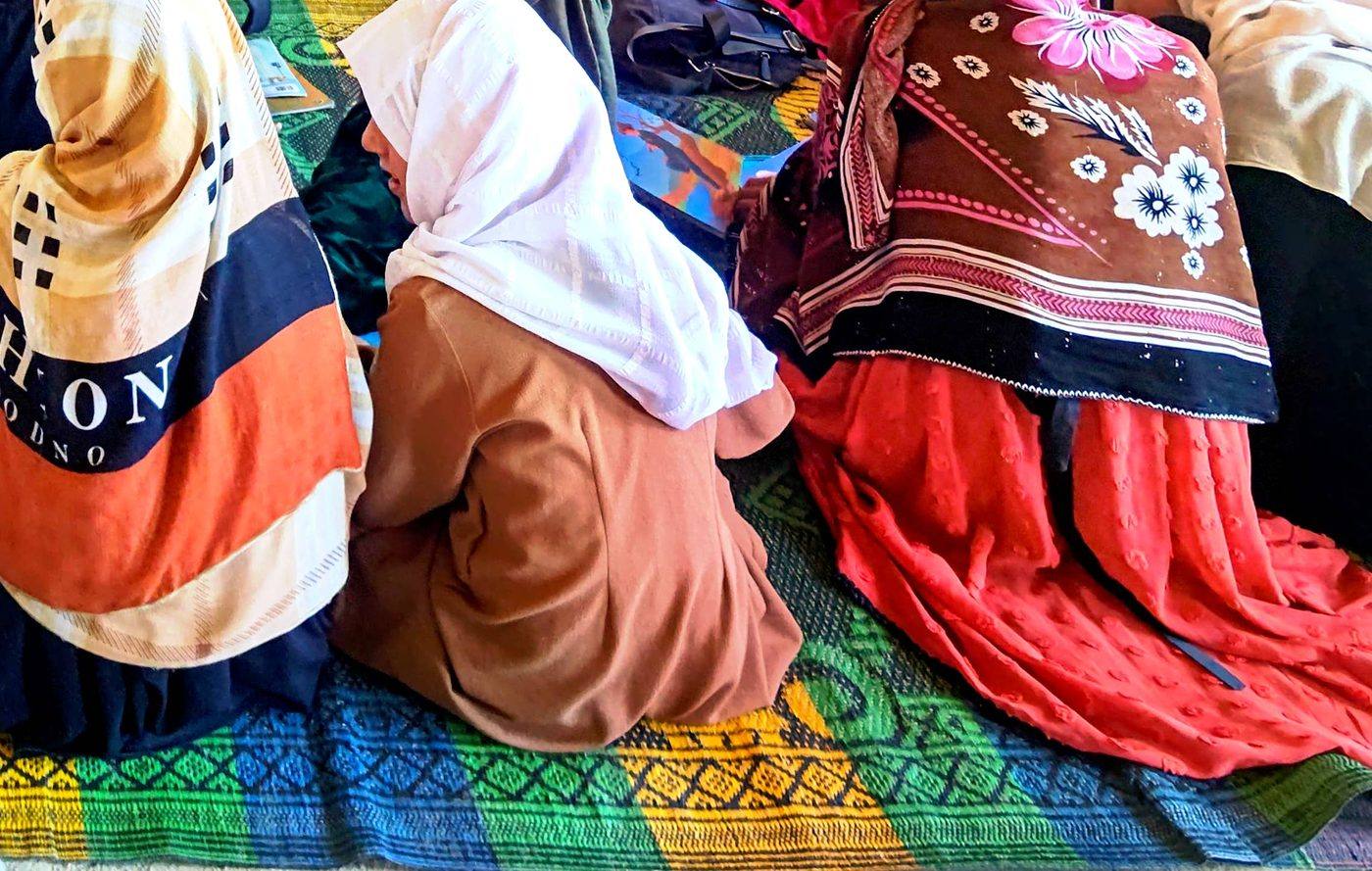
Education is Hope · Hope is Future
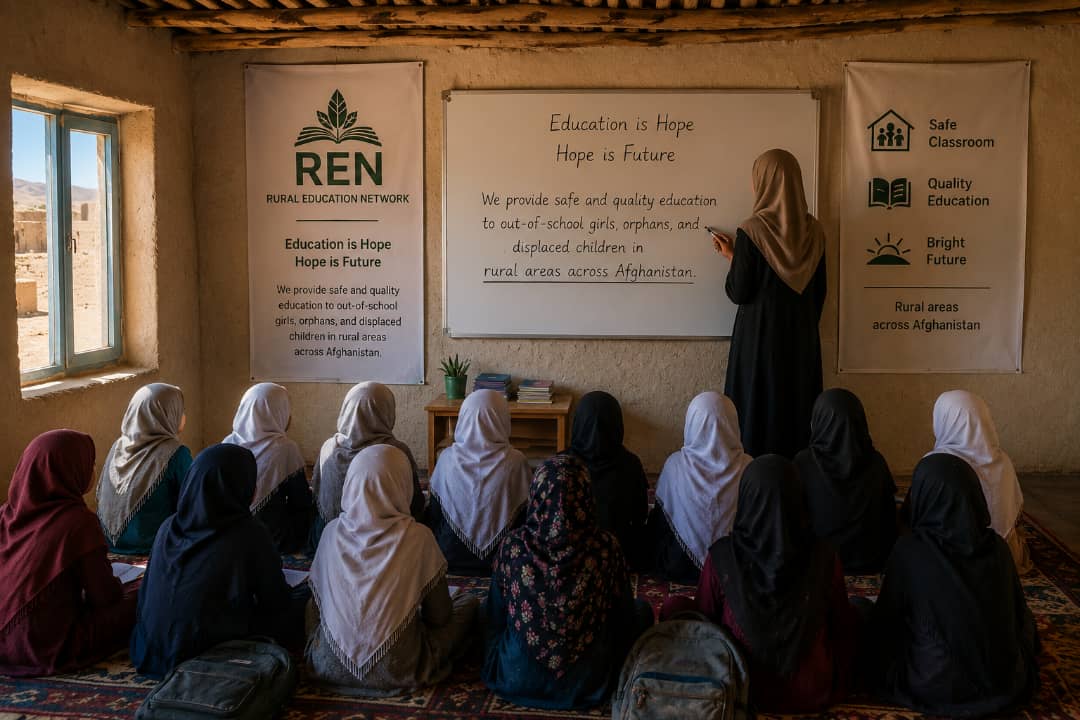
The Rural Education Network brings safe, quality, community-based learning to out-of-school girls, orphans, and displaced children in rural Afghanistan — built and protected by the villages it serves.
The Problem
When schools closed, the doors didn't just shut on a building — they shut on futures.
Across rural Afghanistan, out-of-school girls, orphans, and displaced children have no safe or formal way to learn. In many villages, nearly every teenage girl is now unable to access education. Conflict, poverty, and the closure of schools have left families with no alternative.
The cost of doing nothing is generational. Girls kept out of school face early marriage and a lifetime of poverty, and whole communities lose the teachers, nurses, and doctors of tomorrow. Families haven't given up — they are asking, repeatedly, for a safe place for their daughters to learn.
The demand is real and urgent. When REN's first classroom opened, we expected 10–15 students. 25 girls arrived on the first day.
"I have been out of school for years, but I still hope to continue. I dreamed of becoming a doctor — now I worry about my future."
— A 15-year-old student in rural Wardak
"We have asked the authorities again and again to provide schooling for girls. If this continues, the whole country's future suffers."
— A village community leader
Our Solution
REN establishes safe, community-based classrooms inside rural villages, led by qualified local female teachers and protected by village elders — coordinated and supported remotely so they can run where most organisations cannot work.
Learning spaces are chosen and safeguarded with village elders and families, creating a protected environment where girls can study without fear.
Dedicated local female teachers deliver literacy, mathematics, English, and science across foundational and advanced levels, with regular assessment.
Students gain the skills, confidence, and hope to continue their education — breaking the cycle of illiteracy and reclaiming their futures.
How It Works
The most important ingredient isn't funding — it's the trust of the community. Everything starts there.
We work with village elders and families to secure their support and the safety of students and teachers.
A protected local space becomes a functioning classroom equipped with the textbooks and materials students need.
Qualified local female teachers run daily lessons, assessing each student and placing them in the right learning level.
Attendance and progress are tracked and reported securely, so every classroom is accountable — and ready to replicate.
Where We Work
REN began in the rural villages of Maidan Wardak province in central Afghanistan — a region where conflict and poverty have cut children off from school. We start where the need is greatest and where we have the deepest trust.
From this first community, our vision is to grow into a network of 5–10 learning centres — and ultimately a model that can reach vulnerable children wherever education has been taken from them.
Our Impact
REN is already running. This is what one classroom has shown us — and what it points toward.
"We finally feel our daughters and orphans have a safe place to learn again. This classroom has brought hope back to our entire village, when all other doors were closed."
— A parent in the community REN serves
Today: One classroom, 25 girls enrolled and attending daily, taught by a dedicated local teacher who began as a volunteer.
Where we are now
This year: Three teachers and the materials to educate 90 girls across a full 12-month cycle.
Our immediate goal
Theory of Change
By creating community-protected learning spaces in remote areas, we enable girls and orphaned children to access quality education safely — building toward an Afghanistan where every child can learn and reclaim their future through the strength of their own community.
Why REN
REN grew from lived experience of educational exclusion in rural Afghanistan — and a refusal to accept it for the next generation.
"I have personally experienced these barriers. Because of that, I can build trust with students and families in ways outside organisations cannot. I want to start from one village and grow this into a network that reaches every child who has been denied the chance to learn." Mohammad Sami Mayar Founder & Executive Director, Rural Education Network
Support Us
REN runs lean and reports transparently. Our entire annual budget for a full 12-month cycle of education is just $3,000 — and every dollar is accounted for.
Three qualified local female teachers · $63 per teacher per month
Textbooks, notebooks, pens, and essentials for 90 girls
A full year of safe education for up to 90 girls
REN is a grassroots initiative supported by local community elders, working in partnership with Ventures Beyond Borders. Formal registration is in progress.
Whether you can fund a classroom, share our story, or open a door to a partnership — you can help bring safe education to children the world has overlooked.
To set up: add your organisation's contact email and donation link.